- Must-see highlights: Spectacular water spouts, rugged cliffs, and sweeping ocean views.
- Unique fact: The nearby Halona Cove, also called Eternity Beach, was featured in the classic film From Here to Eternity, making it one of Hawaii’s most famous romantic spots.
- Current use: A natural sightseeing attraction for photographers, hikers, and tour visitors
Halona Blowhole: Nature’s geyser on Oahu’s coast
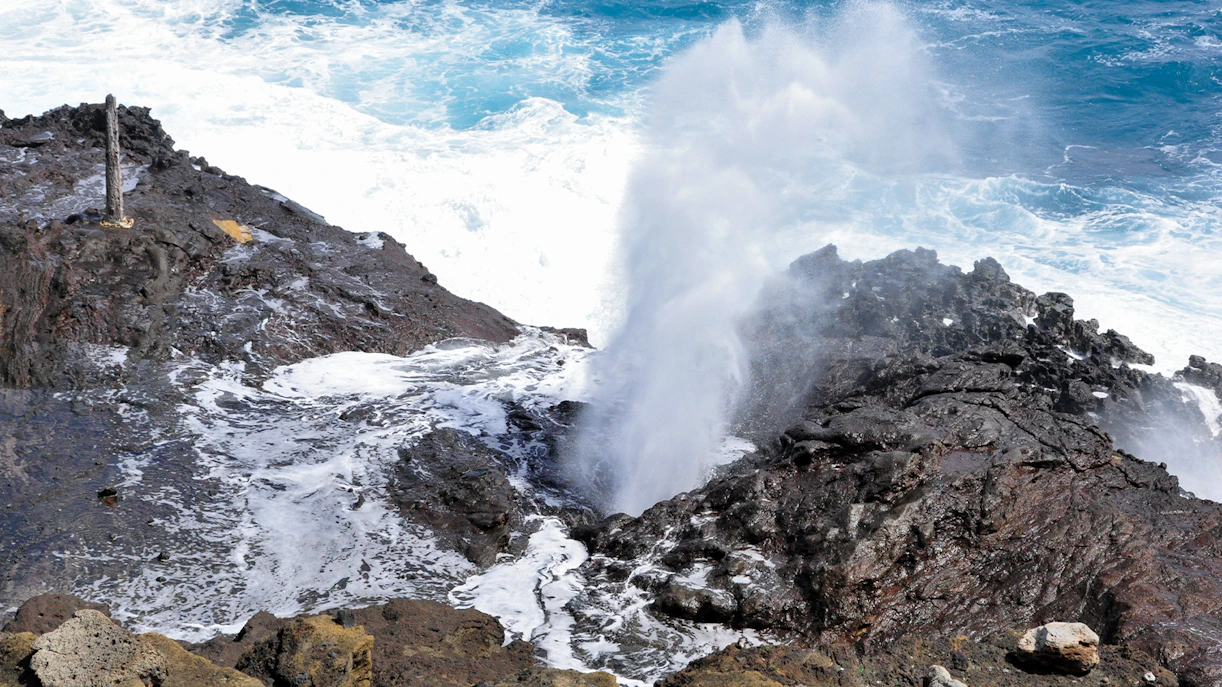
Perched on Oahu’s southeastern cliffs, Halona Blowhole is a natural wonder that never fails to impress. When the waves crash just right, water shoots skyward through a lava tube, creating a dramatic geyser effect, making it a favorite stop for photographers, adventurers, and anyone looking to soak in Hawaii’s coastal beauty.
Where is it located?
Halona Blowhole sits on Oahu’s southeastern shore, just off the Kalanianaʻole Highway, about 25 mins from Waikiki and a short drive past Hanauma Bay.
How to access?
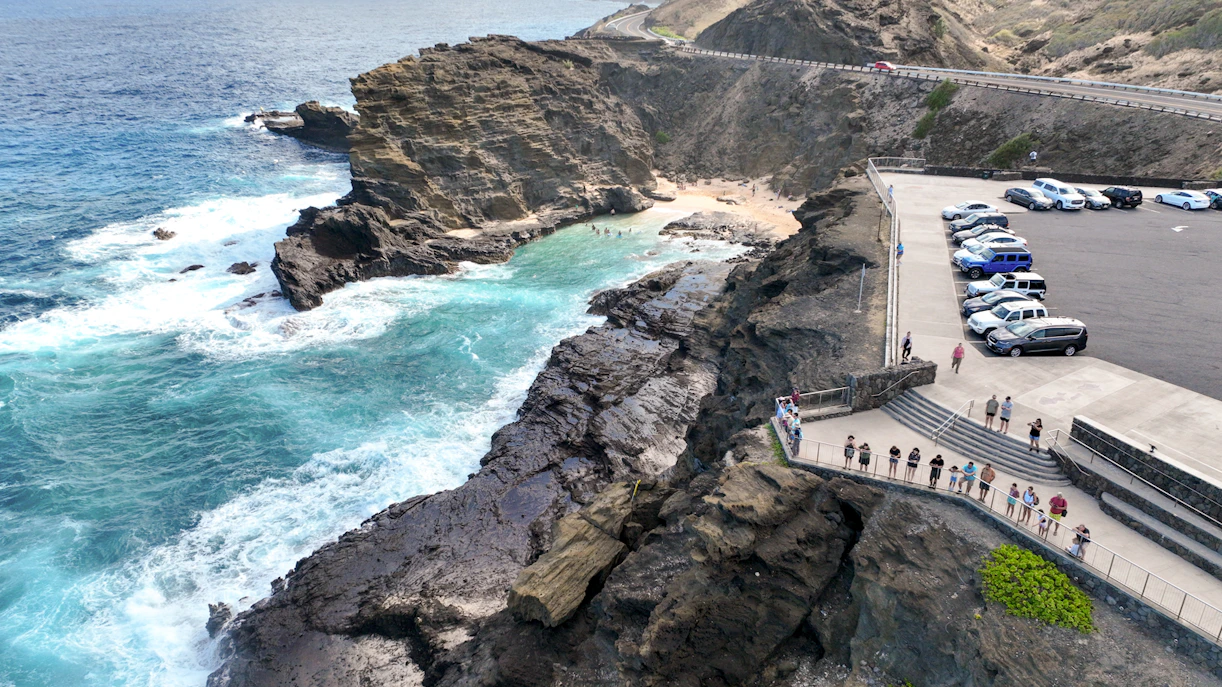
You can see the blowhole safely from the Halona Blowhole lookout, a paved parking area along the coastal highway. The site is free to access and does not require a reservation. Many full-day Oahu tours, like the Grand Circle Island Oahu Full-Day Tour, include Halona Blowhole as a scenic stop.
Halona Blowhole in a nutshell
What to do at Halona Blowhole
1/5
Watch the blowhole in action
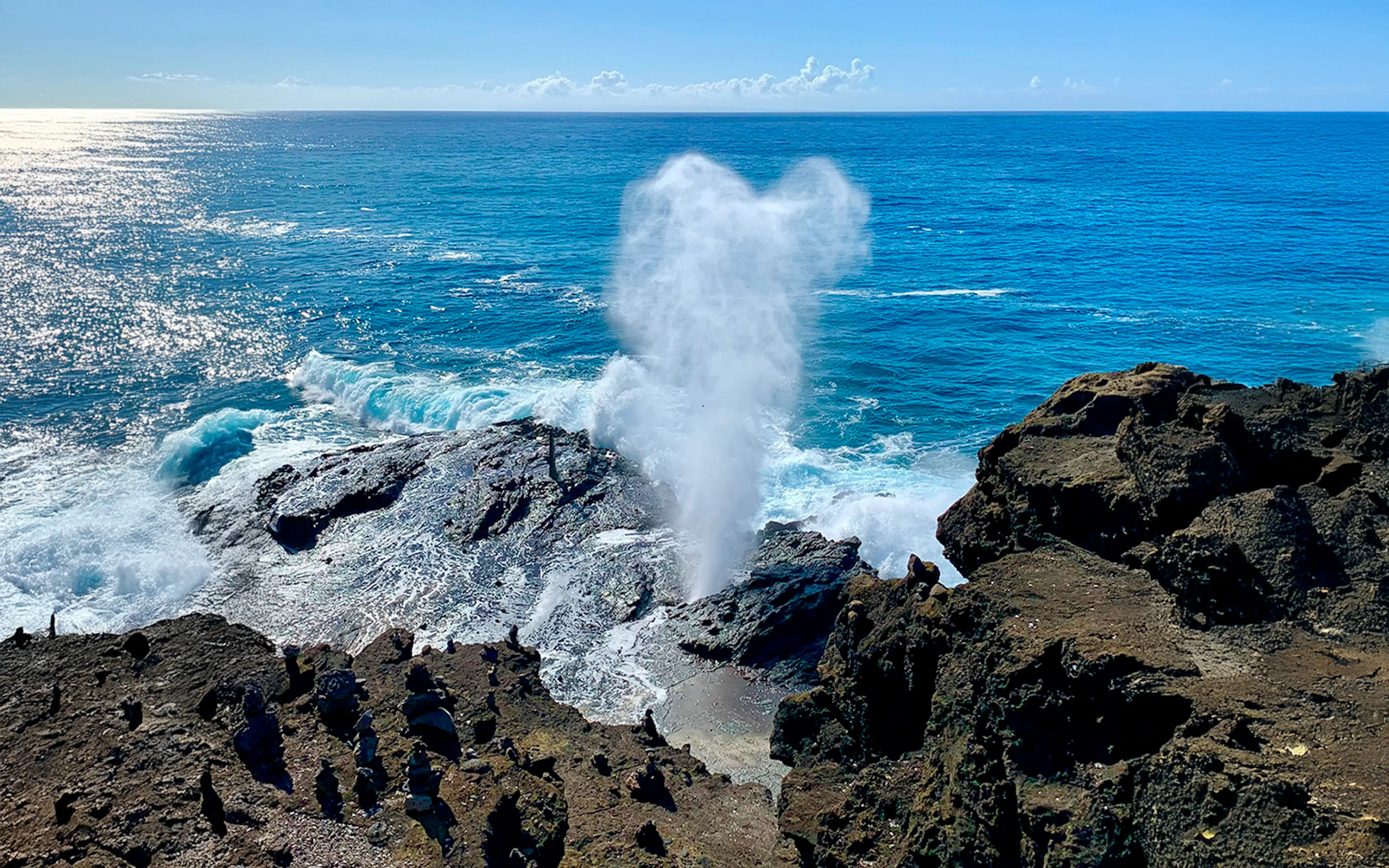
During high tide or rough seas, ocean water surges through the lava tube, shooting vertical spouts that can reach over 30 feet. It’s a mesmerizing natural spectacle that evolves with each wave, offering visitors a unique experience every time.
Admire the coastal panorama
From the lookout, you can enjoy sweeping views of the southeastern cliffs, Pacific waves, and Sandy Beach below. Bring binoculars to spot surfers, seabirds, or even spinner dolphins playing offshore on calm days.
Click iconic photos
The lookout provides a perfect vantage point for wide shots of the blowhole, cove, and ocean horizon. Early morning or late afternoon light enhances the textures of the cliffs, the water spray, and the dramatic natural scenery.
Explore Halona Cove (Eternity Beach)
The tiny sandy Halona Cove, also known as Eternity Beach, can be spotted from the Halona Blowhole lookout. Even without hiking down, the lookout gives stunning views of the cove, cliffs, and ocean, making it a perfect spot for photos and sightseeing.
Enjoy the scenic drive
The Kalanianaʻole Highway winds past Halona Blowhole, offering dramatic cliffside ocean views. Pair a stop here with Hanauma Bay, Sandy Beach, or the Makapuʻu Lighthouse for a full southeastern Oahu sightseeing experience.
How Halona Blowhole was shaped
- Tens of thousands of years ago: Lava flows from Oahu’s southeastern Koʻolau Volcano reach the ocean, forming lava tubes, cliffs, and a rugged coastline. Over time, wave erosion creates the blowhole, where seawater now shoots upward during high tide.
- Pre-1700s: Native Hawaiians use the surrounding cliffs and Halona Cove for fishing and gathering, taking advantage of the rich coastal resources for sustenance and occasional ceremonial purposes.
- 1800s: The area continues to be used by locals for fishing, recreation, and enjoying the scenic coastline, though there are no records of formal settlements directly at the blowhole.
- 1930s–1950s: Halona Blowhole and the nearby cove gain popularity as a scenic stop for locals and early tourists. Photographers and visitors are drawn to the dramatic ocean views, cliffs, and erupting blowhole.
- 1960s–1970s: The Halona Blowhole lookout and roadside pull-off areas are developed, providing safe public access to the site while preserving the natural cliffs and blowhole formations.
- 1990s: The blowhole becomes a well-known stop on southeastern Oahu sightseeing tours, attracting travelers, photographers, and tour groups seeking dramatic coastal views.
- 2020: Visitor numbers decline temporarily during the pandemic, reducing human impact on the cliffs and coastline, highlighting the importance of responsible tourism and environmental preservation.
- Present: Today, Halona Blowhole is one of Oahu’s most visited natural attractions, offering spectacular ocean spouts, cliffside vistas, and views of Halona Cove, while providing insight into the island’s volcanic origins and dynamic coastal environment.
About Halona Blowhole Oahu’s dramatic geology
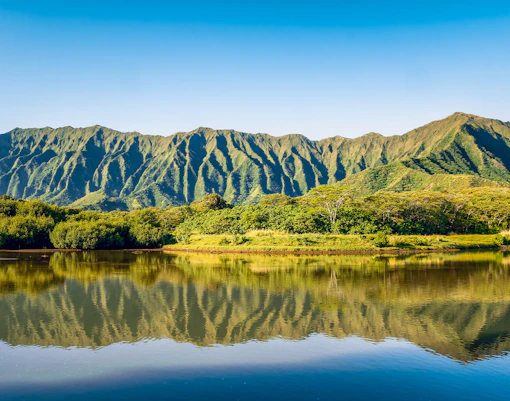
How Halona Blowhole was formed
Halona Blowhole, Oahu, was created from lava flows from the Koʻolau Volcano along the southeastern coast. When molten lava reached the ocean, it formed natural tubes and rugged cliffs. Over time, waves carved one of these tubes into the blowhole, where seawater now erupts skyward during high tide, creating a stunning natural spectacle.
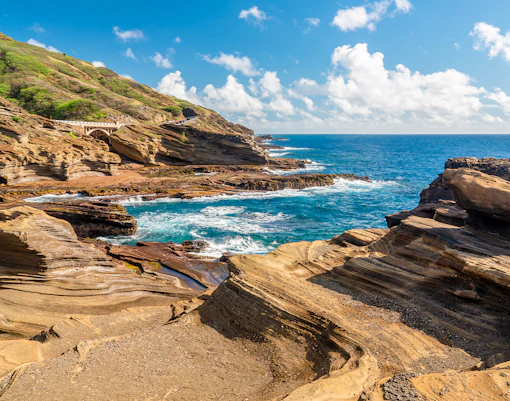
Cliffs, lava tubes, and coastal shapes
You can see how volcanic activity shaped the southeastern coastline. Jagged cliffs, hardened lava layers, and rock outcrops reveal the island’s volcanic past, while nearby Halona Cove (Eternity Beach) formed as waves and lava rock interacted over centuries, producing a small, sheltered beach.
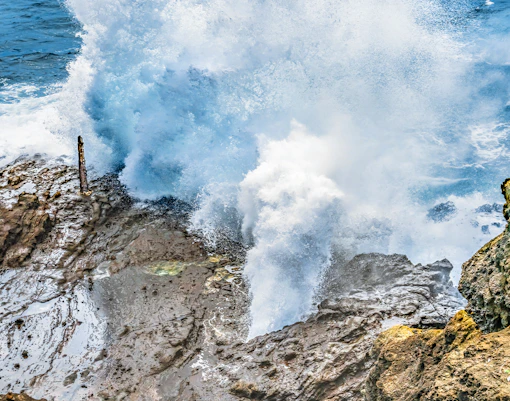
Ocean erosion and landscape sculpting
Wind, rain, and waves have gradually shaped the cliffs, enlarging the blowhole and carving small coves. This ongoing interaction between volcanic rock and ocean forces continues to create the dramatic landscapes that make Halona Blowhole Oahu such a striking natural landmark.
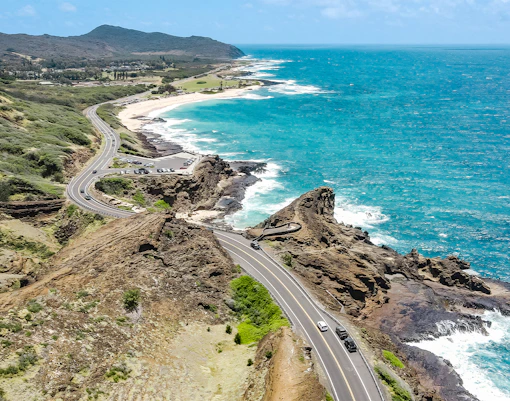
A window into Oahu’s volcanic coastline
Halona Blowhole provides a clear view of ongoing geological processes in action. From the lookout, visitors can observe lava formations, wave erosion, and wind shaping the coast, offering insight into Hawaii’s volcanic history while enjoying breathtaking ocean vistas.
Know before you go
Timings
- Open: The lookout is accessible 24 hours a day, 7 days a week
Location
- Address: Halona Blowhole, Honolulu, HI 96825, USA | Find on Maps
Accessibility
- The lookout is wheelchair accessible with paved paths and parking.
Facilities
- You can find parking, viewpoints, and informational signage here.
- There are no restrooms on site.

- Time it right for the best blowhole show. Visit during high tide or when the ocean swells are larger, often in winter months (November–March), to see water spouting dramatically through the lava tube.
- Bring binoculars or a zoom camera. From the lookout, you can spot surfers at nearby Sandy Beach, seabirds soaring along the cliffs, and the blowhole’s water jets.
- Halona Blowhole is close to Hanauma Bay, Sandy Beach, and the Makapuʻu Lighthouse. Plan a route along Kalanianaʻole Highway to enjoy multiple stunning viewpoints in one trip.
- Maintain a safe distance from cliff edges and wet rocks, as strong waves can be unpredictable. The paved lookout provides excellent views without needing to climb.
- Bring sunscreen, water, a hat, and sturdy shoes to make your visit more enjoyable, especially if you’re stopping at other nearby coastal viewpoints.
Frequently asked questions about Halona Blowhole
Halona Blowhole is a natural ocean geyser on Oahu’s southeastern coast, where waves force seawater through a lava tube, creating spectacular water spouts that can reach over 30 feet high.
It’s along the Kalanianaʻole Highway, about 25 mins from Waikiki, near Sandy Beach and Halona Cove (Eternity Beach). The lookout is easily accessible by car.
No ticket is required. The Halona Blowhole lookout is free and open to the public, making it a quick and convenient stop for anyone exploring southeastern Oahu.
High tide and rough ocean swells produce the tallest water spouts. Winter months (November–March) often provide the most dramatic shows, especially during mornings or late afternoons.
You should stay at the paved lookout and keep a safe distance from the cliffs and wet rocks. Strong waves can be unpredictable, so don’t climb down to the lava edges.
The cove is visible from the lookout, but accessing it requires a steep, unmarked trail that can be dangerous. We recommend you enjoy the view safely from above.
Yes, the lookout area is paved and wheelchair accessible. Access to Halona Cove or the cliff edges is not suitable for wheelchairs.
You may spot seabirds gliding along the cliffs, or spinner dolphins offshore from the lookout. Binoculars make it easier to catch these sights from the overlook.
Absolutely! It is included on the Grand Circle Island Oahu Full-Day Tour alongside Hanauma Bay, and Diamond Head lookout.