Everything you need to know about Hawaiian luaus

Luaus are lively celebrations deeply rooted in Hawaiian traditions and are a key part of their culture. The events feature a large feast, performances, live music, dancing, and a variety of cultural activities that embody the Aloha spirit. Here’s everything you need to know about Hawaiian luaus and why they are a must-experience on your trip to Hawaii.

Quick luau facts

  • Location: Hawaii, United States
  • Coordinates: 19.8987° N, 155.6659° W
  • Popular islands: Oahu, Kauai
  • Annual visitors: 9 to 10 million (to Hawaii)
  • Average duration: 3 to 4 hours

A brief history of Hawaii luaus

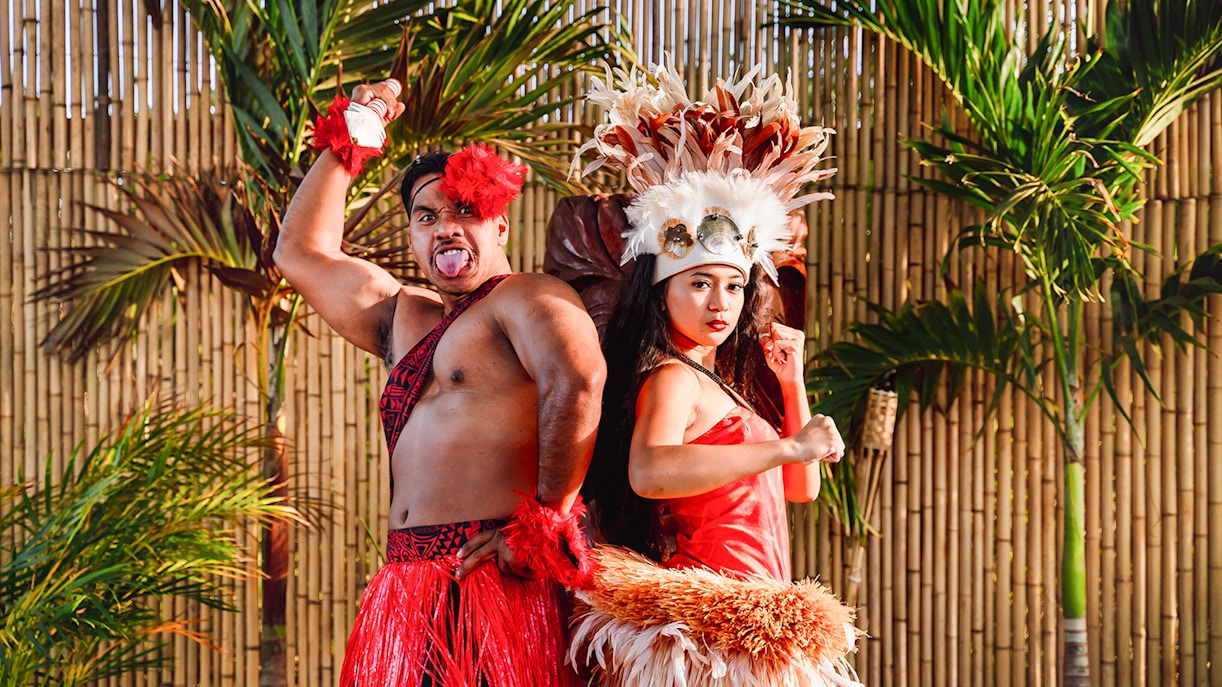
Performers in traditional attire posing before a cultural show at Mauka Warriors Luau, Hawaii.

The first luau, as we know it, took place in 1819 under King Kamehameha II. He abolished the kapu system, which had been enforced earlier, where men and women had to dine separately, and women had to follow certain dietary and societal restrictions.

Luaus were originally held to commemorate milestones and victories, but over time, they evolved to become a celebration of Hawaiian culture overall. Luaus began to incorporate diverse elements of the diaspora of the people who moved to the islands of Hawaii, and this started to reflect in the cuisine, music, and performances.

Today, luaus have become a popular tourist attraction and offer a great way to celebrate and immerse yourself in the constantly changing Hawaiian culture through food, art, and music.
What to expect at a Hawaiian luau

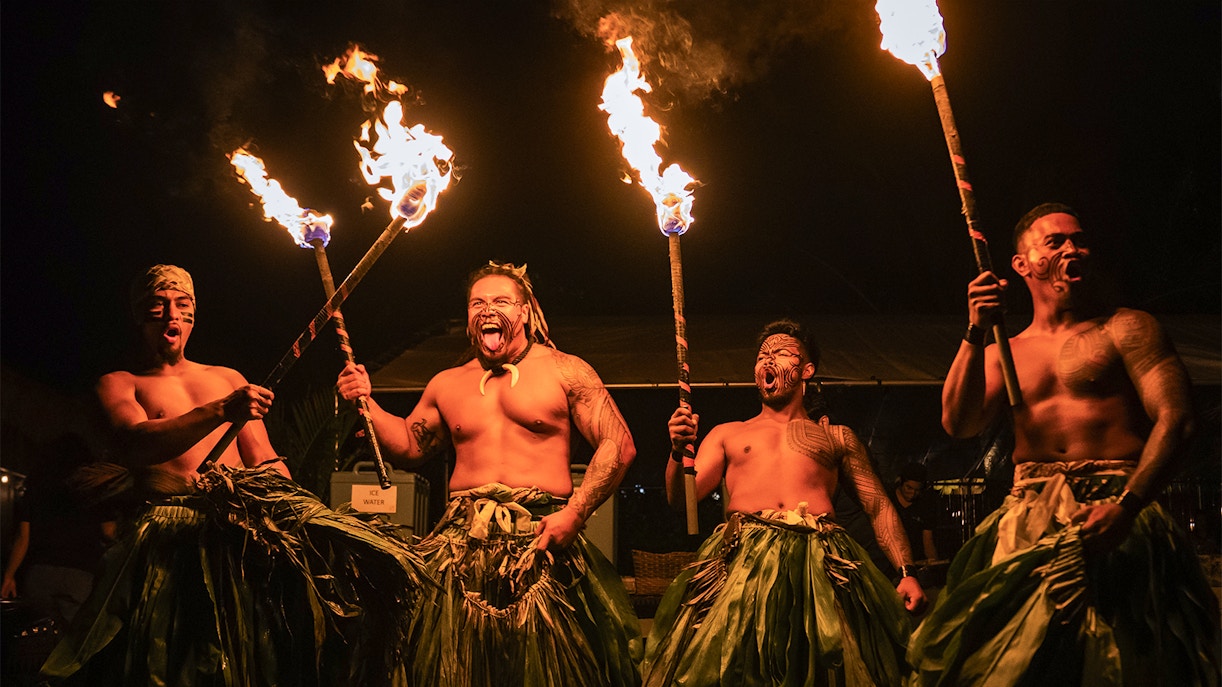
Fire dancers performing with torches on stage at Mauka Luau.
  • Lei greeting: You’ll be welcomed with a lei, which is a wreath or a garland, made using fresh flowers, kukui nuts, or shells, as soon as you enter.
  • A large spread of delicious Hawaiian food: Prepare to leave with your hearts and bellies full because a Hawaiian luau spread is a feast in every sense of the word.
  • Engaging live show: The final live performance is filled with stories of the past, mythology, and more, with fire, hula, songs, and drumming, depending on the luau you choose. Be prepared to leave awestruck.
  • Hula dancing: The traditional dance is used as a means of storytelling, and is often accompanied by ukulele music and percussion.
  • Fire performances: Fire-knife dancing or poi ball performances leave you with a sense of thrill and wonder at the performers’ skills.
  • Historic & cultural overview: You can experience Hawaiian culture firsthand during the luau and learn about their history and mythology through the show to get a deeper understanding of the people.
  • A taste of Hawaiian hospitality: Hawaiians are known for their warm hospitality, and what better way to experience it than by celebrating with them?

The luau feast | An overview

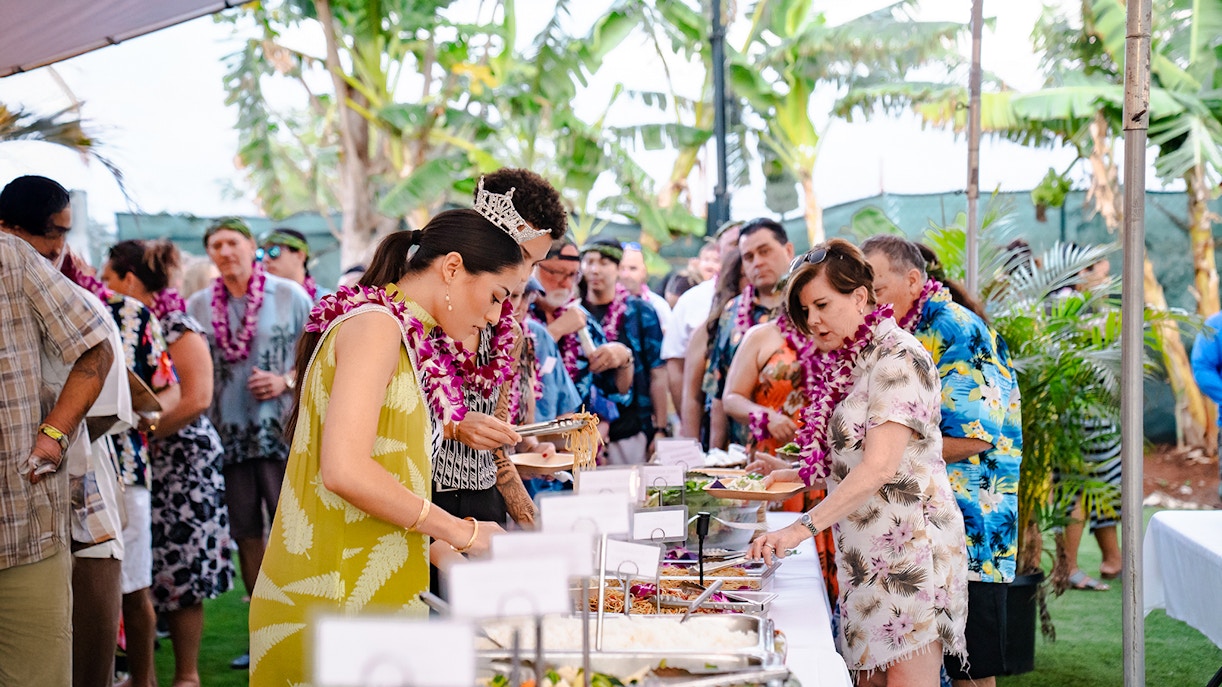
Guests serving themselves at a buffet of Polynesian food at Mauka Warriors Luau.

The feast is usually served buffet-style and includes a variety of Hawaiian dishes. Each menu is different depending on the luau you choose, and has its own unique take on the cuisine. You will also find modern adaptations or elements of global cuisine that have been incorporated into Hawaiian food in general.

A typical luau feast would include kalua pig or imu roasted pork, fresh fish, taro-based dishes, salads, fresh greens, fruit, coconut-based pudding or other similar desserts, and sides such as rice or noodles.

The live show | An overview

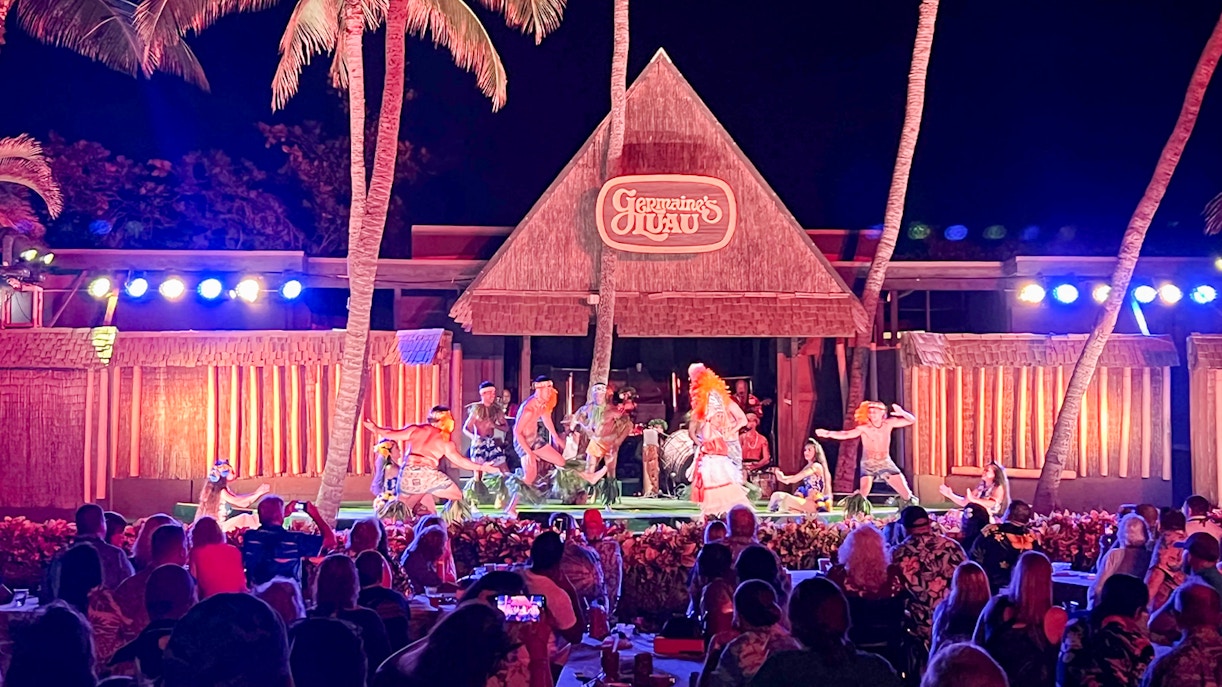
Dancers performing traditional Hawaiian hula on stage at Germaine's Luau, Oahu.

Each show tells a different story, using its own individual theme and style. They use the performance as a platform to showcase the history, mythology, and traditions of the Hawaiian and Polynesian people. You’ll witness chants, singing, dancing, fire shows, reenactments, and more being used (depending on the luau) to narrate their story. From warrior performances to Broadway-style shows, each luau experience is unique in itself.

The cultural activities & ceremonies at luaus

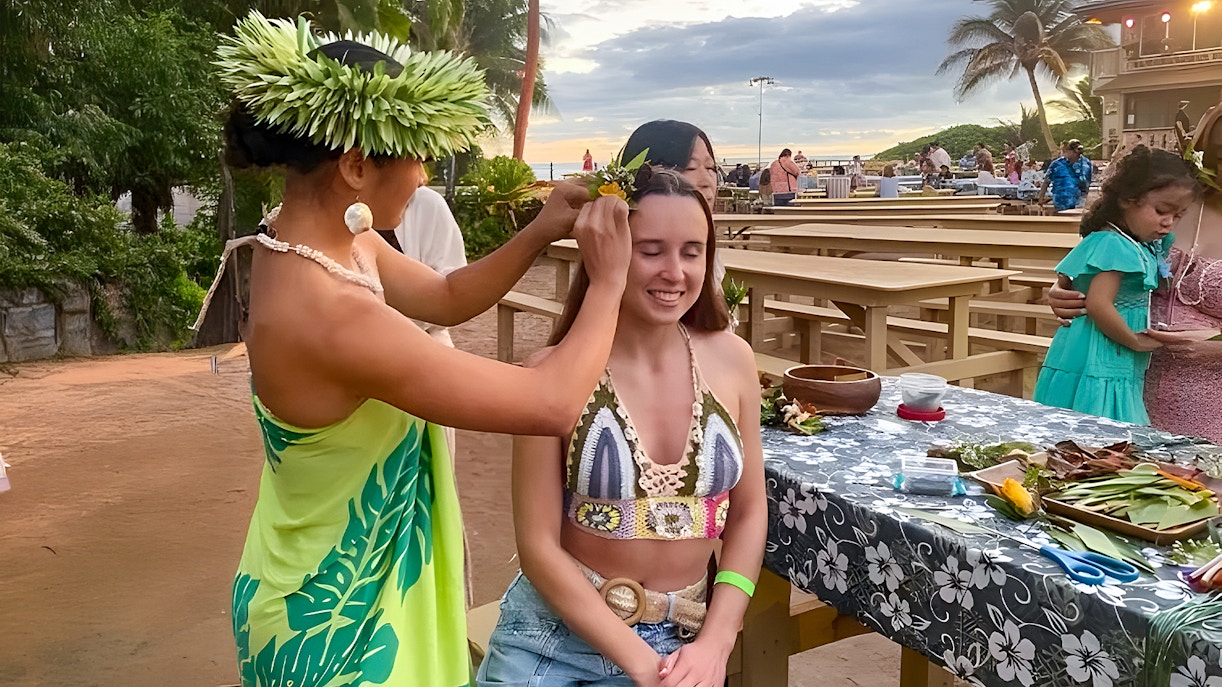
Woman receiving a flower crown at Germaine's Luau pre-show cultural activities.

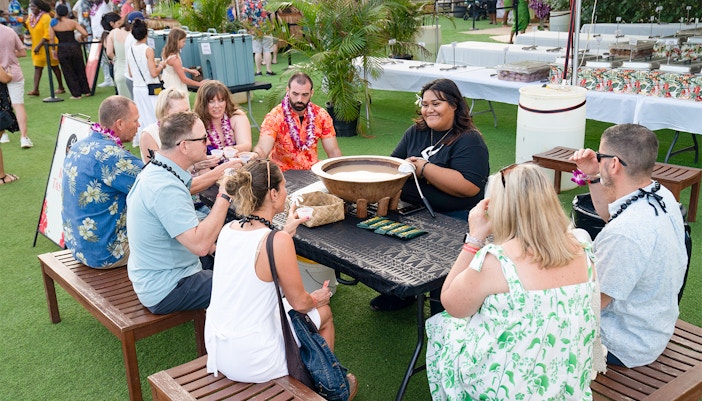
The celebration of Hawaiian culture and traditions at a luau includes many activities that you can participate in. Each luau is different, which means the activities and ceremonies will vary depending on the luau you choose.

  • Conch shell: The sound of the conch shell signifies the beginning of the feast to the guests and precedes the Imu ceremony.
  • Imu ceremony: The imu is the underground oven used to slow-cook the kalua pig. The ceremony involves unearthing the lid of the oven and removing the dish to serve it to the guests at the feast.  
  • Hula lessons: Learn the basics of hula dancing for a fun, lighthearted, and festive start to your evening. 
  • Interactive activities: Other interactive activities could include lessons on how to make fresh floral hairpieces (kupe’e), crack a coconut open whole, learn the basics of poi ball dancing, or even get temporary Moko tattoos (traditional Polynesian-inspired motifs).

Frequently asked questions about Hawaii luaus

Yes, luaus have deep roots in Hawaiian history. Traditionally, they were held to mark important events like victories, births, and community milestones, blending spiritual rituals with feasting and dance.

More reads

Plan your visit

Plan your visit

Timings

Timings

Directions

Directions